

Photodynamic Therapy or PDT, is a two stage treatment that combines light energy and a prescription medicine cream to destroy abnormal cells. When the medicine and light source are combined, they cause a reaction that damages abnormal cells. At Revitalise Skincare Clinic, our Medical Practitioner has years of experience with using PDT to treat various skin conditions.
What conditions can Photodynamic Therapy treat?
- Actinic Keratosis – these are dry, scaly patches of skin that are caused from previous sun damage. They are not always dangerous but there is a chance they can turn into skin cancer.
- Bowen’s Disease – this a very early sign of skin cancer. It usually presents as a red, scaly patch on the skin.
- Basal Cell Carcinoma – a type of non melanoma skin cancer.
- Acne – PDT targets and destroys the bacteria responsible for acne and can also reduce the size and activity of oil glands. This decreases the formation of new acne and improves the appearance of the skin.
At present, Photodynamic Therapy cannot be used to treat malignant melanomas (a rare type of skin cancer), although the technology is constantly evolving.
Overall, PDT is valued for its ability to specifically target abnormal cells while sparing surrounding healthy tissue. This makes it a safe and effective treatment option for many skin conditions.
What happens during the Photodynamic Therapy treatment?
Prior to all treatment at Revitalise Skincare Clinic a personalised consultation takes place with our Medical Practitioner. During your consultation, a medical assessment will take place to ensure suitability.
- Application of the photosensitising agent: A photosensitising prescription medicine is applied to the treatment area.
- Incubation Period: After the application of the photosensitising agent, there is a waiting period. This is usually between one to three hours, this gives time to allow it to penetrate the targeted cells.
- Activation by Light Exposure: A specific wavelength of light is then directed at the treatment area. This light activates the photosensitising agent, which produces a reaction that targets and destroys the cells responsible for various skin conditions.
PDT is generally well-tolerated, though some people may experience mild discomfort during and after treatment. While the light exposure phase may cause a warm or tingling sensation, it is typically manageable. Some people describe a mild stinging or burning sensation during light activation, especially when treating sensitive areas. To ease any discomfort, cooling fans, or topical anaesthetics may be applied to the skin before or during treatment. Afterwards, there can be some temporary redness, swelling, and sensitivity, similar to a mild sunburn, which usually subsides within a few days.
Aftercare-
After PDT, your skin becomes more sensitive to light, so avoiding direct sun exposure for at least 48 hours is crucial. You should wear protective clothing, a hat, and sunscreen whenever you’re outdoors, even after the initial 48 hours. Sun exposure can worsen side effects like redness and swelling and may even reduce the treatment’s effectiveness. Use gentle skincare products and avoid harsh exfoliants or active ingredients like retinoids until your skin fully heals. When you come in for your treatment, we’ll go over all these aftercare steps with you.
How long does it take to see results with Photodynamic Therapy?
Results from Photodynamic Therapy can vary depending on the condition being treated and individual skin characteristics. In general, most patients see improvement within a few days to a week after treatment. For conditions like acne, multiple sessions spaced a few weeks apart may be recommended to achieve optimal results. Patients treating precancerous lesions or sun damage may see results more quickly, sometimes after just one or two sessions, as the therapy targets and destroys the damaged cells effectively. While the results may not be instantaneous, most people notice clearer, healthier-looking skin within a month of starting PDT.
Why choose Photodynamic Therapy?
Photodynamic Therapy stands out as a positive and valuable treatment for several reasons:
- Non-Invasive and Minimal Downtime: PDT is a non-surgical option, reducing the need for invasive procedures,. Most patients resume their regular activities within a few days.
- High Precision and Efficiency: PDT targets only the affected cells, minimising collateral damage to surrounding healthy tissues. This precision makes it an effective treatment with high success rates, especially for precancerous lesions.
- Dual Benefits for Skin Health: In addition to addressing acne, precancerous cells, and sun damage, PDT improves overall skin texture, reduces pores, and offers an anti-aging effect by stimulating collagen production.
- Preventive Action: By treating precancerous cells, PDT helps reduce the risk of skin cancer, making it an ideal choice for individuals with significant sun exposure or a history of skin issues.
- Minimal Side Effects: Unlike many other treatments, PDT has a relatively mild side effect profile, with most side effects being temporary and resolving naturally within a few days.
Before and After Results
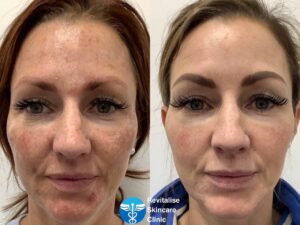
Above is an amazing before and after result from a patient that was suffering with severe sun damage. PDT treatment managed to remove all areas of sun damage and left this patient with clear and glowing skin.
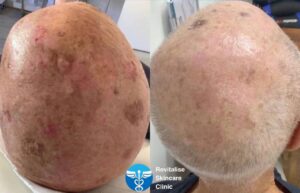
This patient came to us regarding the areas of sun damage on his head. We managed to achieve remarkable results for his Actinic Keratoses, sun damage and pre-cancerous lesions. See his review below-
“I have a bald scalp ragged with solar keratosis and carcinomas from old sun damage. One treatment of PDT from Arvin has almost cleared all of it (going back to get the rest). I wish I knew about PDT and Revitalise years ago”.
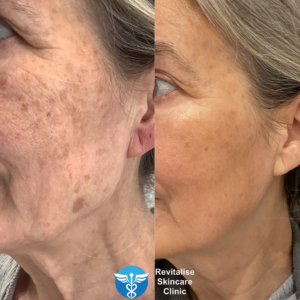
These results speak for themselves! A remarkable before and after result from just one treatment of PDT cleared this patients sun damage and has left her with a smooth and pigment free complexion.
PDT differs from other treatments due to its dual-action approach that combines a photosensitising drug and light exposure. Unlike many conventional treatments that rely on topical creams or more invasive procedures, PDT works at the cellular level to destroy damaged cells, leaving healthy skin cells intact. This makes it gentler on surrounding tissues compared to more aggressive treatments like surgical removal. PDT offers a faster recovery time than many other treatment options, which makes it an appealing choice for people seeking effective results with minimal downtime.
If you’re interested in Photodynamic Therapy, don’t hesitate to contact Revitalise Skincare Clinic for more information today.
Phone – 01225 760556
Email- [email protected]